




How Much Does a Capybara Cost? Price, Legality and What Owning One Really Takes
On
The short answer
A pet capybara runs $1,000 to $3,000 each, and that is the cheap part. The honest guide to price, legality, daily care and the capybara you can actually keep.
How much does a capybara cost? In the US, a pet capybara commonly costs about $1,000 to $3,000 per animal from a licensed exotic breeder. And because capybaras should never be kept alone, you need two. So the honest starting figure is double whatever the breeder quotes you.
That is the easy number. The harder truth is that the animal is the cheapest part. The fence, the pool, the winter shelter, the exotic vet and the daily mountain of grass all come after the purchase, and they keep coming for eight to twelve years.
This guide walks through the price, the legal side, the daily reality and where to buy one safely. It ends with a calmer option for the many people who love capybaras but do not have half an acre and a pond.
How much does a capybara cost to buy
Breeder prices in the US usually land between $1,000 and $3,000 for a single animal. Where a capybara falls in that range depends on the breeder, the age of the animal and how much handling it has had as a youngster.
Now double it. Capybaras live in herds of 10 to 20 in the wild, and up to 100 in the dry season when water gets scarce. A single capybara in a backyard is a lonely animal, and a lonely capybara is not the calm creature you see in videos. They should never be kept alone, so budget for two.
So when someone asks how much does a capybara cost, the true purchase answer is two animals, plus the trip to collect them. No trustworthy breeder ships a capybara to a stranger. You drive there, you meet the animals, you drive back with a very large rodent in the car.
The real cost of keeping a capybara
Ask any exotic keeper about capybara cost and they will smile and point at the yard, not the animal. The setup usually costs more than the pair of capybaras, and in most cases a lot more. Here is what a pair actually needs, without made up dollar figures, because the numbers change with every state, every yard and every winter.
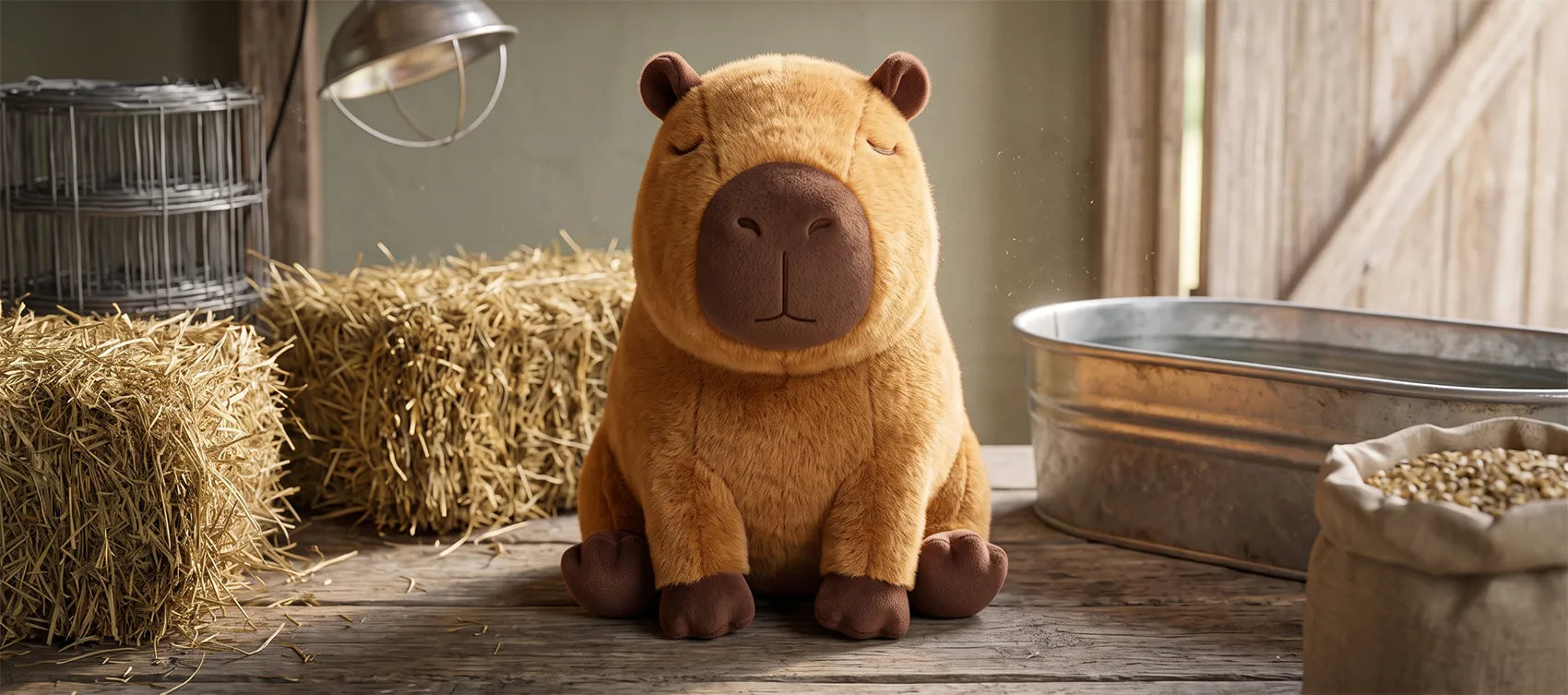
Then come the running costs: hay by the bale, fence repairs, water and filtration for the pool, heating the shelter, and vet visits that are priced like exotic care, not like a cat check-up. Add it up over a decade and the animal turns out to be the deposit, not the bill.
There is also the odd stuff. Capybaras practice coprophagy, which means they eat their own soft morning droppings to digest cellulose a second time with the help of gut bacteria. Normal for them, and worth knowing before you sign.
Is it legal to own a capybara in the US
Is it legal to own a capybara? It depends where you live, and the rules change at both the state and the city level. Texas and Pennsylvania are commonly cited as allowing them. Florida requires a permit. States such as California and Georgia prohibit them outright.

Even in a state that allows them, your county or city may have its own rules on exotic animals, livestock, fencing and noise. Before you spend a dollar, contact the state wildlife agency and read the local ordinances. This article is general information, not legal advice, and rules change.
Can you own a capybara where you live? Ask the people who issue the permits, not a forum.
Are capybaras good pets
Are capybaras good pets? For the right person with the right land, they can be wonderful. For almost everyone else, no. Here is the honest version.

They are calm, social and rarely aggressive. That is exactly why people want them. But they are also 77 to 146 lb of rodent with large front teeth that never stop growing. Do capybaras bite? A wild or badly kept capybara can bite hard. They are not tame by default, and taming is commonly reported to take time, patience and a young start.
They need water. Not a bowl, a pool they can sink into. Their eyes, ears and nostrils sit high on the head so they can float with only the top showing, they can stay under for up to about five minutes, and they sometimes doze in the water with just the nose out.
They live 8 to 10 years in the wild and up to about 12 in human care. That is a long commitment to two animals that need daily grazing, a heated winter shelter and a specialist vet.
And they are not a house pet. They are grazing, wading, mud-loving outdoor animals. Capybaras as pets belong in a fenced yard with a pond, and the people who keep them well are running a very small zoo. A capybara pet on the sofa is a video, not a lifestyle.
Where to buy a capybara
If you have the land, the permits and the vet lined up, where to buy a capybara comes down to one rule: licensed exotic breeders only, and you meet them in person.
- Visit the breeder. Look at the animals, the enclosure, the water and the herd. A good breeder will ask you as many questions as you ask them.
- Never pay a deposit to someone you have not met. Online "capybara for sale" listings are often scams, and the pattern is always the same: a low price, a sad story, and a request for payment before you see anything.
- No trustworthy breeder ships a capybara to a stranger. If someone offers to, walk away.
- Ask which exotic-animal vet they use. If they do not have one, that tells you plenty.
Capybara for sale: how to read a listing
Search for a capybara for sale and you will find three kinds of page. The first is a licensed exotic breeder with a real address, photos of the herd and the enclosure, and a capybara price that sits in the $1,000 to $3,000 range, usually with a waiting list. The second is a classified ad for capybaras for sale with a price well under that, no location, and a phone number that only texts. The third is a page that exists to answer how much is a capybara and sells nothing. Only the first is worth your time.
A few signals that separate a real capybara animal for sale from a scam: the breeder asks about your enclosure, your pool and your state's rules before talking money; the animal is sold as one of a pair or to a home that already has one; there is an exotic-animal vet on record; and you are expected to collect in person. A low capybara pet cost is the clearest warning sign of all. Nobody sells a healthy, legally bred capybara cheaply.
The capybara you can actually keep
Most people who search how much does a capybara cost close the tab somewhere around the pool. That is fine. Loving capybaras and owning capybaras are two different hobbies, and the first one is a lot cheaper.

If what you want is the shape and the stillness of the real animal, the Riverbank Capybara Teddy Bear Plush is the most realistic one in the store. It is 12 inches, standing on four legs in shaggy honey fur, no hood, no costume. Just a capybara.
If you want something with presence, the Cloud Nine Giant Capybara Plush comes in 16 to 31 inches, lies flat and round, with smooth honey fur and no hard parts. And if you want the feeling that there is an actual capybara in the room, the Room Filler Big Capybara Stuffed Animal Plush goes up to 47 inches, which lands inside the body length of a real adult. It has never once asked for hay.
Want the herd? The Nest Family Mother Capybara Plush Set is a 13 inch mother with a zip belly pouch and four baby capybaras in pink, blue, grey and brown. A whole herd, no fence required, no permit to check.
And for people who like a bit of weight in their lap, the Calm Down Weighted Capybara Plush is 26 inches long with 2.2 lb of inner weight and lies flat. It is a comfort object, not a treatment. Everything here is a collectible for ages 14 and up, and none of it will ever need an exotic vet.
Bring home the calm, skip the permit
You came here asking how much does a capybara cost, and the answer is more than most people expect, in money, land and years. The good news is that the calm the internet fell in love with does not need a pond. Browse the full capybara plush collection for the realistic Riverbank, the fruit hats and the little herds, or go straight to the giant capybara plush range if you want one big enough to lean on. Two of them, naturally. They should never be kept alone.
Frequently asked questions
Can you own a capybara in Texas?
Texas is commonly cited as one of the states that allows pet capybaras, alongside Pennsylvania. That said, city and county rules on exotic animals, fencing and livestock still apply, and they vary a lot. Before buying, confirm with the state wildlife agency and your local authority. This is general information, not legal advice.
Can you own a capybara in California?
No. California is one of the states that prohibits keeping capybaras as pets, and Georgia is another. If you live elsewhere, the picture changes state by state and even city by city, so check with the state wildlife agency and your local authority before you plan anything. This is general information, not legal advice.
How long do capybaras live as pets?
Capybaras live 8 to 10 years in the wild and up to about 12 years in human care. A pet that is fed well, has a pool, shade, a warm winter shelter and a companion is more likely to reach the upper end. Plan for the full stretch, and for two animals, before you commit.
Can a capybara live inside a house?
Not in any real sense. A capybara needs a fenced outdoor space, a pool deep enough to submerge in, shade, and roughly 6 to 8 lb of grass a day. It may come indoors for a warm winter shelter, but it is an outdoor grazing animal, not a house pet. If you want a capybara on the sofa, a plush is the only one that belongs there.